



The Power of People Who Care
The interview below is featured in Concinnity, the annual Andrus Family Philanthropy Program newsletter. Lincoln Mondy, program officer at the Andrus Family Fund (AFF), sat down with Zaira Cedano, AFF’s senior program associate, to talk about her passions, her work, and all things AFF.
A Conversation with Zaira Cedano of the Andrus Family Fund

Lincoln: Outside of work, how would you describe yourself? Who are your people?
Zaira: I would describe myself as a peace-loving free spirit who wants to see everyone succeed. I want all of us to be free, all of us to thrive. I’d say my superpowers are compassion and empathy. My people are the lovers, free-thinkers, and bridge-builders – the folks I really think we need in these uncertain times.
Lincoln: Talk to me about the first time you heard about the Andrus Family Fund? What were some of your initial reactions? Assumptions?
Zaira: When I first heard about AFF back in 2019, it just sounded like a very noble cause that I could align myself with. I’ve always cared about youth, having worked in after-school programs in my own community – aiming to not just provide young people help with schoolwork, but to truly empower them. I thought this could be a way for me to engage in work that was more meaningful and impactful. And at the time, AFF’s mission was simply “to foster just and sustainable change” to advance social justice for “vulnerable youth.” So when we had our strategy refresh in 2022, in which we surfaced abolition as our north star, I understood I was now part of something truly powerful that could really steer us toward liberation. Abolition isn’t just the dismantling of harmful systems; it’s about creating systems of care, support, and well-being in their place.

Lincoln: What were some of the hesitations or doubts you had entering a new field? How did you move through that?
Zaira: I’ve often said, ‘I’m a swimmer.’ You can toss me anywhere, and I will do my darndest to keep afloat. I was brought on as a temporary administrative assistant and wasn’t even sure if the job would pan out. I thought at a minimum, I would gain new skills and new experiences. Framing like that, from a place of abundance, is what made the transition from the private sector to nonprofit a smooth one. Because working in philanthropy was an opportunity for me to do work that was in line with my values, it helped dissolve any hesitation I might have had. For me, this is my second life where I’m engaged in work that matters.
Lincoln: I often refer to you as the AFF brain—you’ve been with AFF through multiple types of positions, directors, a strategy refresh, and more. That’s a lot of movement, but you are always steady. What keeps you focused during changing tides?
Zaira: I think I was well-suited for the changes and transitions on the team. In my own story, I grew up with a lot of change. I’m an immigrant from the Dominican Republic; I moved here when I was very young. I moved around a lot, so change was familiar to me. Philanthropy requires a person to be nimble and adaptable. It’s helped me see the growth and evolution that is possible within myself, within an institution, and within a movement. I also gained a deep appreciation for the brilliant folks I’ve worked with and built relationships with. I’ve had the privilege to work alongside folks who are really principled, who believe in justice, who center the community, who bring their full selves to the work. They’ve been my gold standard for how to show up. I think what keeps me grounded is knowing my role is to be the one steady force within the change. As the one who manages operations for the team, I also understand that I’m the oil of the machine, and I need to keep things moving.
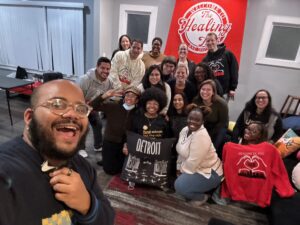
Lincoln: The communities we serve have always been up against systems of oppression, violence, and unbalanced opportunities. However, that doesn’t make the moment we’re currently in any less frightening or challenging. What makes you keep showing up to do this work?
Zaira: As someone who understands that the United States has benefits and resources not found in other places, I also know there’s still a lot of work to do. What keeps me showing up is the understanding that folks on the frontlines need allies here—people who will understand their struggles, advocate on their behalf, and ensure triumphs don’t go unnoticed. “We’re not free until we are all free” is the reminder I give myself that helps me keep going.